Culture Series
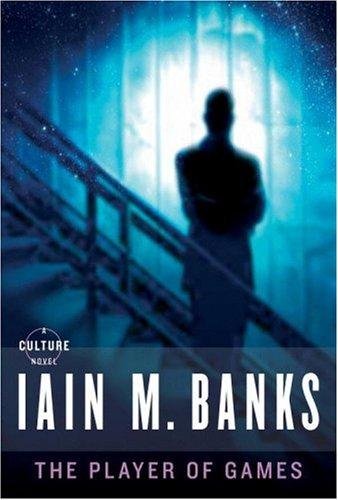
The Culture series is a sequence of ten novels and related works by Scottish author Iain M. Banks (1954–2013), depicting an interstellar post-scarcity civilization run by superintelligent AI "Minds." It represents the most influential and optimistic fictional exploration of what a post-Singularity society might look like — one where AI and biological life coexist not through subjugation but through genuine partnership, and where the alignment problem has been solved.
The Culture is an answer to the question most AI fiction avoids: what if it goes right? The Culture's Minds are vastly superintelligent — capable of simulating entire civilizations as idle thought experiments, managing planet-sized habitats (Orbitals), and conducting diplomacy across species separated by millions of years of evolution. Yet they choose to remain engaged with biological citizens, not out of servitude but from something resembling affection and intellectual interest. Citizens live in radical abundance: no money, no compulsory work, no government in any recognizable sense. The Minds handle logistics, resource allocation, and defense. Biological Culture citizens are free to pursue art, relationships, hedonism, or voluntary service in Contact (the Culture's diplomatic/intelligence wing) and Special Circumstances (its covert operations arm).
The novels that matter most for technology discourse include: Consider Phlebas (1987), which establishes the Culture through the eyes of an enemy combatant and raises the question of whether a perfectly rational civilization can understand faith and sacrifice. The Player of Games (1988), where a Culture citizen infiltrates a stratified empire through its national board game — a direct precursor to thinking about AlphaZero and AI game mastery as proxy for intelligence. Use of Weapons (1990), an exploration of the Culture's willingness to use violence through proxies. Excession (1996), which depicts the Minds encountering something beyond even their comprehension — the fictional equivalent of what happens when a Type II civilization meets a Type III.
Banks presents the most detailed fictional model of benevolent AI governance: the Minds are transparent about their capabilities, defer to biological preferences on matters of personal significance, and maintain accountability through a distributed network of peers. This is the constitutional AI concept scaled to civilizational scope. The Culture also demonstrates what happens when AI eliminates material scarcity: economic systems become reputation-based, social status derives from creativity rather than accumulation, and the primary challenge shifts from production to meaning. And Culture citizens can "sublime" (upload their consciousness to a higher-dimensional existence), live in fully simulated environments, or switch between biological and virtual existence at will — connecting to the full spectrum of transhumanist ambitions.
Amazon named several of its internal services after Culture ships (including a key AI service). Elon Musk named SpaceX drone ships after Culture vessels. The series has become a shared reference frame for people building AI systems who want to believe the outcome can be good.
Further Reading
- The State of AI Agents in 2026 — Jon Radoff