Ready Player One
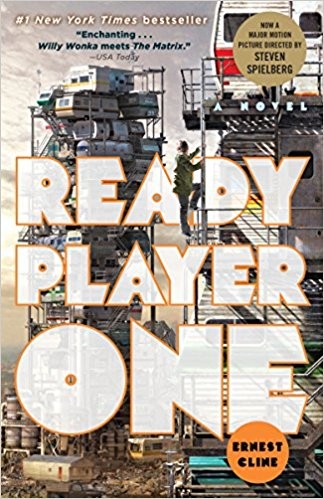
Ready Player One (2011, film 2018) by Ernest Cline depicts a near-future where most of humanity lives, works, and socializes in the OASIS — a massive multiplayer virtual reality universe that has effectively replaced the physical internet. While not the most literary or technically rigorous science fiction novel, it has become the most commercially influential metaverse narrative of the 21st century, shaping how millions of non-technical people understand virtual worlds.
The OASIS as metaverse vision combines several concepts that the technology industry is actively pursuing: a persistent, shared 3D environment accessible through VR headsets and haptic suits; a unified identity system (one avatar across all experiences); a real economy with its own currency; user-generated worlds spanning every genre and intellectual property; and social structures that range from schools to guilds to corporations. The Spielberg film amplified this vision with stunning visual setpieces that made the metaverse concept tangible for a mainstream audience. When Facebook rebranded as Meta in 2021, the imagery it used drew heavily from OASIS-like visions.
What Ready Player One gets right is the social pull of virtual worlds. The OASIS succeeds not because of its technology but because the physical world has become intolerable — economic collapse, environmental degradation, and inequality drive people into virtual spaces where they can be whoever they want. This mirrors the actual adoption pattern of virtual worlds: Roblox, Fortnite, and Minecraft don't succeed because of graphical fidelity but because they offer identity, community, and agency that the physical world constrains. The novel's depiction of an economy where virtual goods have real value anticipated the digital commerce and creator economy trends by a decade.
What it gets wrong — or at least oversimplifies — is equally instructive. The OASIS is a single, centrally controlled platform run by one company, which is exactly the monopolistic architecture that interoperability advocates and decentralization proponents argue against. The novel treats nostalgia (specifically 1980s pop culture) as the OASIS's primary content driver, missing the user-generated content revolution that actually powers modern virtual worlds. And its haptic technology is implausibly good while its AI is almost nonexistent — the OASIS has no generative content, no AI NPCs, no procedurally generated worlds, all of which are now understood as essential to metaverse scalability.
The cultural impact is undeniable. Ready Player One is the reference point that mainstream audiences use when they hear "metaverse." For better or worse, it set expectations: people expect virtual worlds to be immersive, fun, identity-affirming, economically meaningful, and escapist. The gap between this expectation and the current state of VR technology is both the metaverse industry's biggest challenge and its clearest product roadmap.
Further Reading
- The State of AI Agents in 2026 — Jon Radoff